
How Much Is My CNC Machine Worth in Hungary?
A practical guide for Hungarian owners who want to estimate CNC machine value, understand what buyers look for, and prepare a stronger sales case.
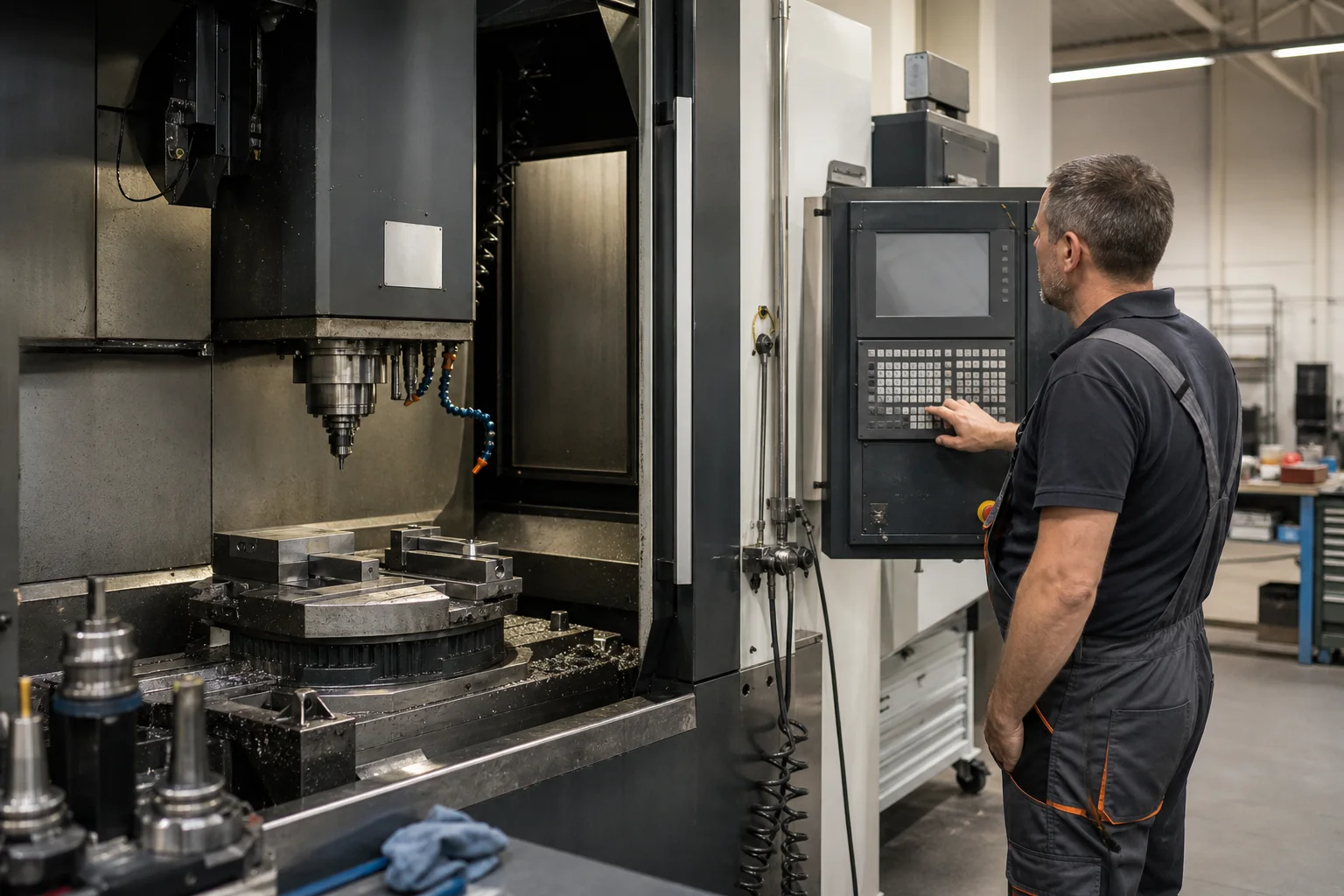
If you are asking how much your CNC machine is worth in Hungary, the short answer is: it depends far more on condition, specification, documentation and buyer demand than on the build year alone. Two machines of the same model can have very different market values depending on spindle condition, axis wear, control system, tooling, maintenance history and how quickly a buyer can put the machine back into production.
For Hungarian manufacturers, the valuation question is usually practical. You may be freeing up floor space, replacing a machine, closing a line, or converting idle equipment into working capital. The right price is not a theoretical figure. It is the price a real buyer is willing to pay after considering transport, installation, risk and expected remaining productive life.
What determines CNC machine value in Hungary
The most important point is that CNC machine value in Hungary is shaped by the same fundamentals seen across the wider European used-machine market. Local demand matters, but so does the ability to sell cross-border when the machine is attractive enough.
The main value drivers are usually:
- Machine type and application: Turning centres, machining centres, grinding machines and multi-axis equipment each attract different buyer pools.
- Brand and model reputation: Well-known industrial brands often have stronger resale interest, but brand alone does not guarantee a high value.
- Technical specification: Travel, spindle speed, number of axes, tool capacity, table size, chuck size, automation compatibility and control generation all influence buyer interest.
- Condition and wear: Actual mechanical condition, backlash, spindle noise, ways, ball screws, hydraulics, coolant system and electronics matter more than the production year.
- Maintenance history: Service records, retrofits, repairs and evidence of regular care reduce uncertainty for buyers.
- Tooling and accessories: Options can help a sale, but they do not automatically add full value. A pallet pool, probing system or chip conveyor is only valuable if it matches buyer demand.
- Availability and logistics: Easy dismantling, accessible loading and known transport requirements can make a machine more attractive.
Spindle hours can help indicate usage, but they do not independently determine remaining life. A lower-hour machine can still need significant work if it has been poorly maintained. A higher-hour machine can still be valuable if it has been serviced properly and remains accurate and reliable.
Why build year alone is not enough
Many owners start with the year of manufacture, but build year only gives a rough age reference. It does not tell you whether the machine was lightly used, heavily used, modernised, or left standing for long periods.
A newer machine may still have limited value if it has damage, control issues or worn axis components. An older machine may be worth more than expected if it has a desirable control, strong brand reputation, clean documentation and proven production readiness. In valuation, condition and marketability usually matter more than age alone.
How buyers in Hungary and Europe look at used CNC machines
Hungary is part of a broader manufacturing and industrial supply chain, so a machine does not only compete within local borders. Buyers from neighbouring countries and other parts of Europe may also be relevant, especially when the machine is a standard industrial format that is economical to transport and reinstall.
This cross-border demand can work in your favour, but only when the machine is attractive enough to justify the logistics. Buyers will compare the asking price against:
- dismantling and loading costs
- road transport or special transport requirements
- reinstallation and commissioning
- replacement parts availability
- control compatibility with their existing shop floor
- risk of hidden wear or downtime
That is why asking prices and actual transaction prices are often very different. An advertised price is only a starting point. The realised sale value depends on inspection, negotiation and whether the machine fits a buyer’s production needs.
What lowers CNC machine value
Some factors reduce value quickly, even when the machine still runs.
Common value reducers include:
- missing service records or unclear history
- visible oil leaks, worn ways or spindle problems
- outdated or unsupported control systems
- damaged screens, drives or servo components
- missing accessories needed for normal operation
- corrosion from storage conditions or long idle periods
- incomplete documentation, manuals or wiring diagrams
- poor presentation, dirty condition or lack of test evidence
Long idle periods deserve special attention. A machine that has not been run for a long time may need recommissioning, even if it looks complete. Buyers usually price that uncertainty into their offer.
What can increase value
To improve used CNC machine value Hungary owners should focus on the things a buyer can verify.
Useful value support includes:
- recent service and inspection records
- a clear description of machine condition
- photos of the control, spindle, axis beds and work area
- evidence that the machine can power up and run a test cycle
- a list of installed options and accessories
- confirmation of serial number, model and configuration
- details of any recent repairs or retrofits
- information about programming, tooling and automation interfaces
A clean, complete and well-documented machine is easier to assess and easier to buy. That usually improves buyer confidence and reduces negotiation friction.
How to estimate value before asking for an offer
If you need a first estimate, use a structured internal check rather than a guess based on the purchase invoice or original list price.
Ask these questions:
- Is the machine complete and operational?
- Are there visible mechanical, hydraulic, electrical or control issues?
- Does it have current or recent production capability, or has it been idle?
- Is the model still commercially relevant to European buyers?
- Are manuals, maintenance records and serial data available?
- What needs to happen before the machine can be removed and transported?
This process gives a more realistic starting point than comparing it with the original purchase price. A high original price does not guarantee a high current value. Buyers pay for usable industrial capability, not historical cost.
Why selling in Hungary may still attract European buyers
For many used CNC machinery Hungary sales, the real market is broader than one factory gate. Export buyers often look for reliable, well-specified machines that can be delivered faster than new equipment. Hungarian sellers can benefit from that if the machine is technically solid and logistics are manageable.
However, a cross-border sale is only efficient when the economics work. If a machine requires heavy refurbishment, expensive dismantling or difficult transport, the market will discount that risk. This is another reason why a professional review is more useful than a rough online estimate.
When a professional valuation is worth it
A professional valuation makes sense when:
- the machine is high value or technically complex
- you are selling several machines together
- the machine has automation, probing or custom integration
- you need to compare scrapping, internal reuse and sale
- you want to avoid underpricing a machine with real market demand
- the machine has a maintenance history but needs a technical buyer assessment
For owners and plant managers, the goal is not just a number. It is knowing whether the machine should be sold as-is, repaired first, dismantled for parts, or offered to a buyer network that can assess its purchasing potential.
A practical rule for Hungarian owners
If you want a realistic answer to “how much is my CNC machine worth in Hungary?”, think in terms of three layers:
- technical condition: what works, what is worn, and what may fail soon
- commercial relevance: whether buyers still need this type of machine
- sale logistics: how easy it is to remove, transport and recommission
Those three factors usually explain most of the price difference between a machine that sits unsold and one that attracts serious interest.
If you are preparing to sell and want a professional assessment of your used CNC machine value Hungary, you can start with a structured review through Machine.nl, where the focus is on CNC metalworking machines and buyer-side purchasing evaluation across Europe.