How Much Is My CNC Machine Worth in Germany?
Learn the main factors that determine the value of a used CNC machine in Germany, from brand and condition to control, hours, options and transport.
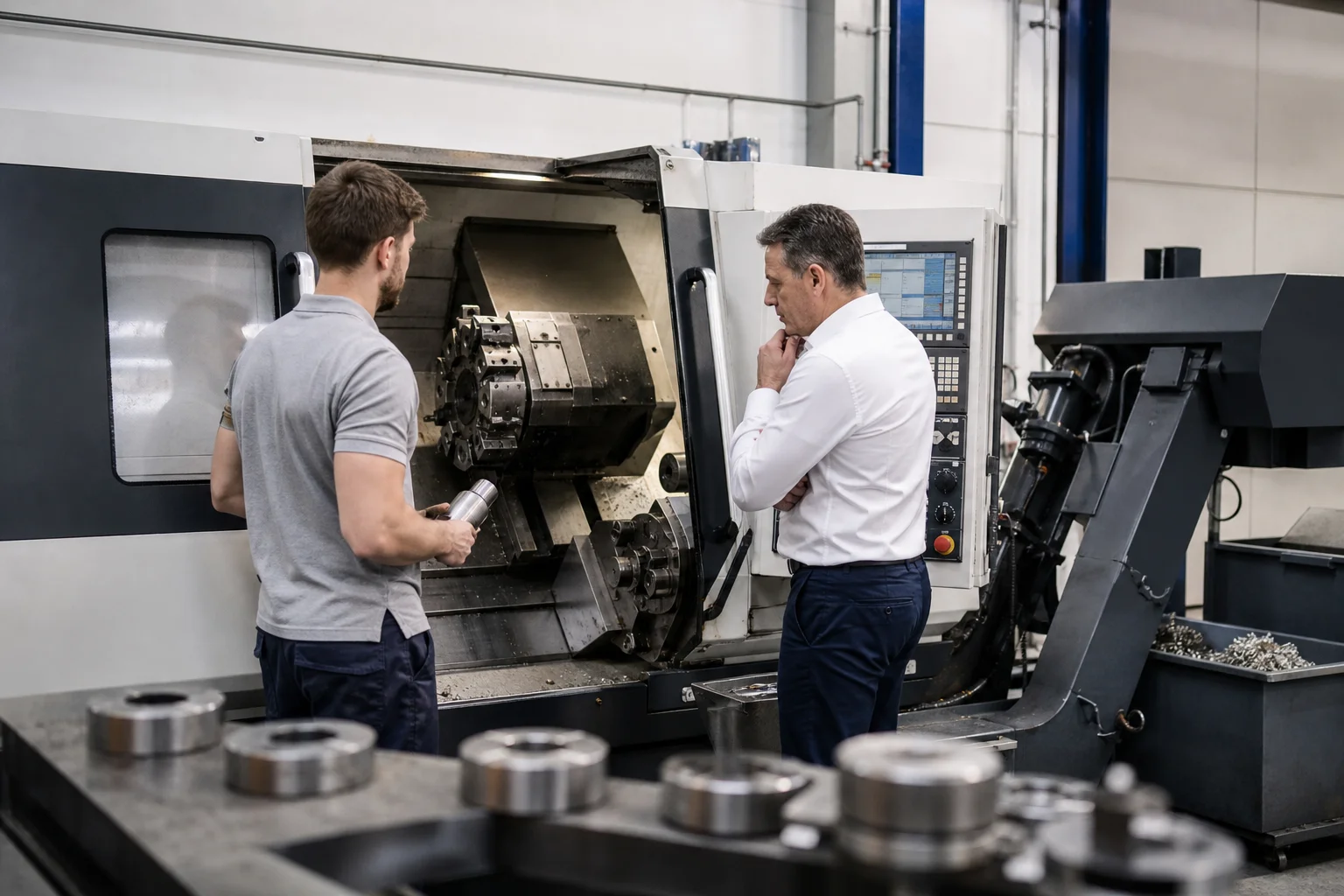
If you are asking, “How much is my CNC machine worth in Germany?”, the honest answer is that there is no single number that fits every machine. The value of a used CNC machine depends on how it is specified, how it has been maintained, how it is configured today, and how easy it is for a buyer to put it back into production.
For machine owners in Germany, that matters because the buyer pool is often broader than one local region. A well-kept machine may attract interest from German workshops, but also from buyers elsewhere in Europe if the specifications and transport make sense. At the same time, a machine that looks similar on paper can have a very different market value once condition, control system, tooling, and service history are checked.
What determines used CNC machine value in Germany?
The value of a used CNC machine is a combination of technical and commercial factors. Buyers do not look only at age. They look at whether the machine can still produce reliably, whether it fits a current production need, and what risk they take by buying it used.
The most important valuation factors are usually:
- brand and model reputation
- machine type and application
- year of manufacture
- spindle hours and overall operating history
- control system and software version
- axis configuration, travels and capacity
- installed options and accessories
- current condition and maintenance record
- availability of documentation and spare parts
- demand in Germany and across Europe
- dismantling, loading and transport effort
None of these factors works alone. A later build year does not automatically mean a higher value. Likewise, a high original purchase price does not guarantee a strong resale value today. The market is driven by practical usability, condition and demand.
Brand and model matter, but they are not the whole story
Some brands and machine families are easier to place on the market because buyers already know them, trust them, or maintain them in their own production. That can support value. The same is true for models that are widely used in job shops, toolrooms or serial production.
But brand recognition is only one part of the picture. A premium name does not protect value if the machine has poor maintenance, worn axes, damaged electronics or an outdated control that buyers no longer want. On the other hand, a less famous machine can still have solid value if it is complete, accurate and ready to work.
For that reason, a proper CNC machine valuation in Germany should always combine the brand with the actual machine condition and setup.
Year of manufacture is useful, but not decisive
Buyers usually want to know the year, because it helps them place the machine in a technical generation. However, build year alone does not determine value.
Two machines from the same year can be very different. One may have low usage, regular servicing and a modern control upgrade. Another may have long shifts, interrupted maintenance and visible wear on critical components. In that case the newer machine is not necessarily the better one.
This is why a serious used CNC machine price assessment in Germany must go beyond the nameplate.
Spindle hours: important, but never a complete answer
Spindle hours are often one of the first figures buyers ask for. They are useful because they indicate how much the machine has been used. But spindle hours do not independently determine remaining life.
A machine with moderate spindle hours can still be worn if it has been used under heavy cutting loads, poorly maintained, or exposed to contamination. A machine with higher spindle hours can still be attractive if it has been professionally serviced, regularly aligned and kept in stable production conditions.
When discussing spindle hours, it is also important to distinguish between total machine use and the condition of the spindle, guides, drives and electronics. Buyers do not value the hours in isolation; they value what those hours mean in practice.
Control system and software affect buyer interest
The control is one of the most important value drivers on any used CNC machine. It affects usability, training, programming compatibility and serviceability. A control system that is still common in the market and supported by technicians is generally easier to sell than an obsolete system with limited support.
Software version, CNC language compatibility and retrofit history also matter. If a machine has an updated control but the installation is neat, documented and fully functional, that can help. If the control is old, incomplete or has fault history, buyers may reduce their offer or avoid the machine altogether.
This is especially relevant for German sellers because many buyers in Europe compare machines across borders. They often ask whether they can integrate the control into their existing workflow without additional cost or downtime.
Configuration and options: useful, but not automatically valuable
Many owners assume that options always add value. In reality, options only help if they match the needs of the buyer.
Examples of options that may influence value include:
- tool magazine capacity
- automatic tool changer
- probing systems
- live tooling
- tailstock or steady rest
- fourth or fifth axis
- high-pressure coolant
- chip conveyor
- automation interfaces
- pallet systems
- extraction or filtration units
These features can make a machine more attractive, but they do not automatically increase the price in a simple way. A buyer who does not need the option may not pay extra for it. In some cases, a complex option set can even narrow the buyer pool if it adds maintenance risk or makes the machine harder to move.
The right question is not “Does the machine have many options?” but “Do those options support a practical, working production setup for a buyer?”
Condition and maintenance history are often decisive
For a used CNC machine, condition is often the most decisive factor after the technical specification. Buyers want to know whether the machine still holds tolerances, whether it runs reliably and whether there are signs of hidden wear.
Useful evidence includes:
- service reports
- maintenance logs
- alignment or geometry checks
- spindle repair history
- photos of the machine in operation
- documentation of replaced parts
- alarm history or recurring fault notes
A machine that is clean, complete and demonstrably maintained is usually easier to sell than one that is dirty, disconnected or partly dismantled. Missing guards, damaged cables, leaks, worn ways or unclear fault history all increase buyer risk.
If the machine can still run under power, that usually helps evaluation because it allows a more reliable inspection. But even then, the machine should be assessed carefully. Running does not always mean healthy.
The market in Germany and across Europe
German machine owners benefit from a broad European buyer network, especially for used CNC metalworking machines. A machine that may no longer fit one factory’s production can still be relevant to another buyer with a different job mix, labour structure or capacity need.
Cross-border demand can improve sale potential, but it also means that buyers compare alternatives very closely. They will look at technical condition, availability, transport cost and the work needed to commission the machine at the destination.
That is why transport matters. A machine that is straightforward to dismantle, load and ship is generally easier to place than one that requires major logistics work. Buyers also consider whether the machine can be moved economically from Germany to another region in Europe and brought back into operation without excessive delay.
Why asking price is not the same as market value
One common mistake is to treat an advertised price as the actual value of the machine. That is not reliable.
An asking price is only the seller’s starting point. It may be too high, too low or unrelated to the final transaction price. The real market value depends on condition, documentation, urgency, buyer demand and the cost for the next owner to install and use the machine.
The original purchase price is also not a reliable indicator. A machine that was expensive when new may have limited current value if the control is outdated or the machine has heavy wear. Conversely, a simpler machine with good maintenance and the right specification can still be attractive.
How to estimate your CNC machine value realistically
If you want a realistic estimate, start with the facts buyers will check first:
- exact make, model and serial number
- year of manufacture
- control type and software version
- spindle hours and operating history
- table size, travels and capacity
- tooling, accessories and installed options
- service records and known repairs
- current condition, faults and missing parts
- whether the machine can be inspected under power
- dismantling and transport situation
Then compare the machine not with a new replacement, but with what a buyer would need to spend to make it productive. That includes transport, installation, possible repairs, tooling adaptation and commissioning.
This is the practical logic behind CNC machine valuation in Germany: the machine is worth what a buyer can reasonably justify after taking all costs and risks into account.
When a professional valuation is worthwhile
A professional valuation is especially useful when:
- the machine is expensive or highly specialized
- you are replacing it and need to understand disposal options
- the machine has an older control or unclear service history
- the machine is partially operational or recently repaired
- you want to compare direct sale potential with other exit routes
- you need an external opinion before deciding whether to sell locally or across Europe
For companies, this can help before a plant restructure, line replacement or asset disposal process. For workshop owners, it can prevent underpricing a machine that is still attractive to the right buyer.
A practical way to approach the sale
If you are planning to sell a used CNC machine in Germany, the most effective first step is to prepare a complete and honest machine dossier. Include photos, specification data, hours, control details, known faults and maintenance records. The better the information, the more accurate the valuation can be.
Machine.nl works with owners who want to submit used CNC metalworking machines for professional review. In appropriate cases, the machine can be assessed for purchasing potential and offered into the European buyer network supported by Keetels Machines expertise. That is especially useful when you want a realistic view of whether the machine has direct purchase potential rather than just a theoretical asking price.